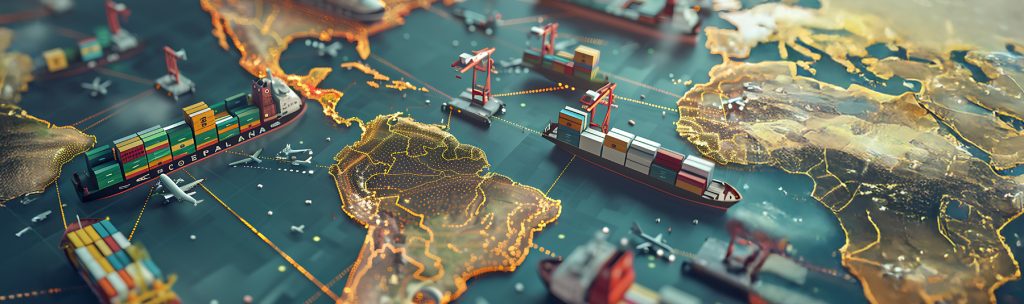
International trade in Latin America is entering a period of profound transformation. For years, the region has relied on traditional logistics models, characterized by long supply chains, complex customs procedures, and a heavy dependence on specific markets such as the United States, Europe, and Asia. However, in recent years, factors such as digitalization, the growth of e-commerce, and advances in logistics infrastructure are completely redefining the way Latin American countries buy, sell, and connect with the world.
Today, discussing the future of international trade in the region is not just about exports and imports. It is about technology, efficiency, regional integration, and new opportunities for businesses of all sizes.
A Region in Transition: From Traditional Commerce to Digital Commerce
Latin America has historically played a significant role in global trade, particularly in sectors such as agriculture, mining, manufacturing, and energy. However, one of the main challenges has been the lack of efficient logistical integration among countries and the reliance on manual or poorly digitized processes.

Today, this is changing rapidly. The growth of e-commerce has driven a new dynamic: small and medium-sized businesses can now sell products beyond their borders without the need for extensive physical infrastructure. Digital platforms, international marketplaces, and more accessible logistics solutions have paved the way for a more dynamic ecosystem.
This change benefits not only large corporations but also entrepreneurs seeking to expand their reach into international markets without facing the traditional barriers to foreign trade.
Digitalization as a Driver of International Trade
One of the most important factors in the evolution of international trade in Latin America is digitalization. Today, technology is present in virtually every stage of the logistics chain:
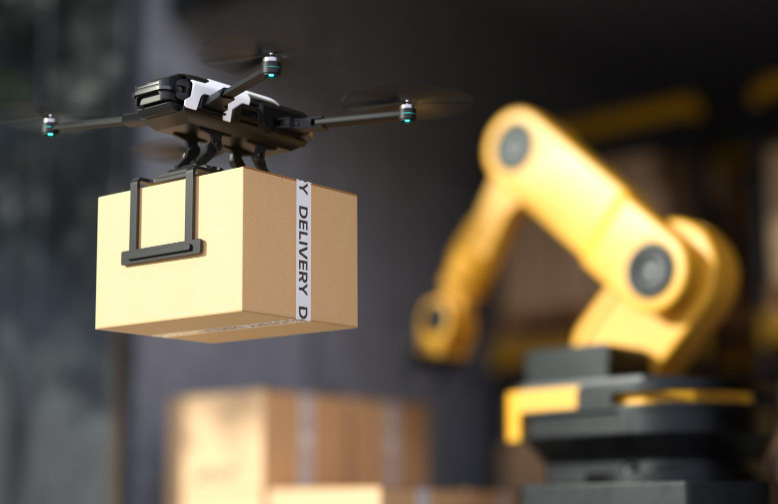
- Real-time tracking systems for international shipments
- Automation of Customs Processes
- Digital platforms for inventory and order management
- Artificial Intelligence Applied to the Optimization of Logistics Routes
- Data integration among suppliers, carriers, and customers
These advances have made it possible to reduce delivery times, minimize errors, and increase transparency in operations.
In addition, digitization has made it possible for smaller companies to compete on equal footing with larger players by gaining access to tools that were previously reserved for multinational corporations.
The Growth of Cross-Border Trade
Cross-border e-commerce is one of the most significant trends in the region. More and more consumers in Latin America are purchasing products directly from the United States, Europe, or Asia, driven by variety, competitive prices, and access to brands that are not always available locally.
This phenomenon has led to increased demand for services that make it easy, fast, and secure to import products. In this context, logistics solutions that enable the consolidation of shipments, customs clearance, and cost optimization have become essential.
The growth of cross-border trade has also created new opportunities for companies that act as logistics intermediaries, connecting consumers to international markets in a more accessible way.
New Opportunities for Latin American Companies
The future of international trade in Latin America depends not only on the importation of products, but also on the region's ability to export value-added goods.

More and more companies are opting for:
- Export of Local Products with a Regional Identity
- Using Digital Platforms to Reach Global Markets
- Strategic partnerships with international logistics providers
- Market diversification to reduce economic risks
This represents a key opportunity for the region's economic growth, especially in sectors such as food, fashion, technology, and specialized manufacturing.
Challenges That Still Need to Be Addressed
Despite the progress made, there are still significant challenges that limit the potential of international trade in Latin America:
- Complex customs procedures in some countries
- High logistics costs compared to other regions
- Uneven infrastructure across countries
- Lack of technological integration in certain sectors
- Dependence on Specific Foreign Markets
Overcoming these challenges will be essential to building a more competitive and sustainable business ecosystem.
The Future: Integration, Technology, and Efficiency
In emerging e-commerce markets, logistics is no longer just an operational function; it has become a key differentiator for brands.
With a specialized partner like Hound Express, companies can optimize their entry into the Colombian market by:
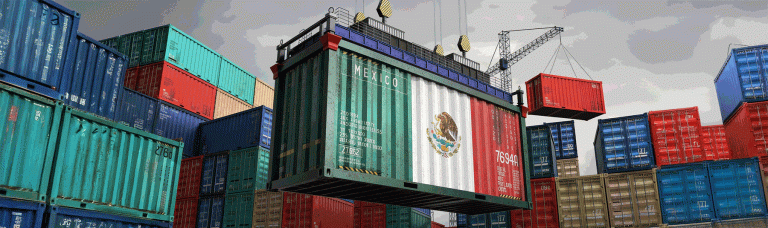
- International Shipping: Mexico to Colombia
- Specialized customs clearance
- Optimization of delivery times
- Operational support for cross-border e-commerce
Colombia is already a priority market for e-commerce in Latin America
Everything suggests that the future of international trade in Latin America will be shaped by three main pillars:
- Regional integration:
Greater cooperation among countries to facilitate intraregional trade and reduce barriers. - Technology Applied to Logistics:
The use of artificial intelligence, automation, and digital platforms to improve efficiency throughout the supply chain. - End-User Experience:
Consumers and businesses will demand faster, more transparent, and simpler processes.
In this context, the companies that manage to adapt to these changes will be the ones to lead the market in the coming years.
Conclusion
International trade in Latin America is at a turning point. The combination of technology, digitalization, and new consumer trends is profoundly transforming the way the region connects with the world.
Although significant challenges remain, the opportunities are enormous. The key will be to adopt more efficient logistics models, take advantage of available technology, and promote greater integration among countries.
The future is not only promising—it is already underway. And Latin America has the potential to become an increasingly important player in global trade, provided it continues to move toward a more modern, agile, and connected system.